01 / Full-Stack E-Commerce

YKB Clothing

A full-stack clothing e-commerce platform with authentication, product management, cart, checkout, orders, wishlist, reviews, and administrative management.

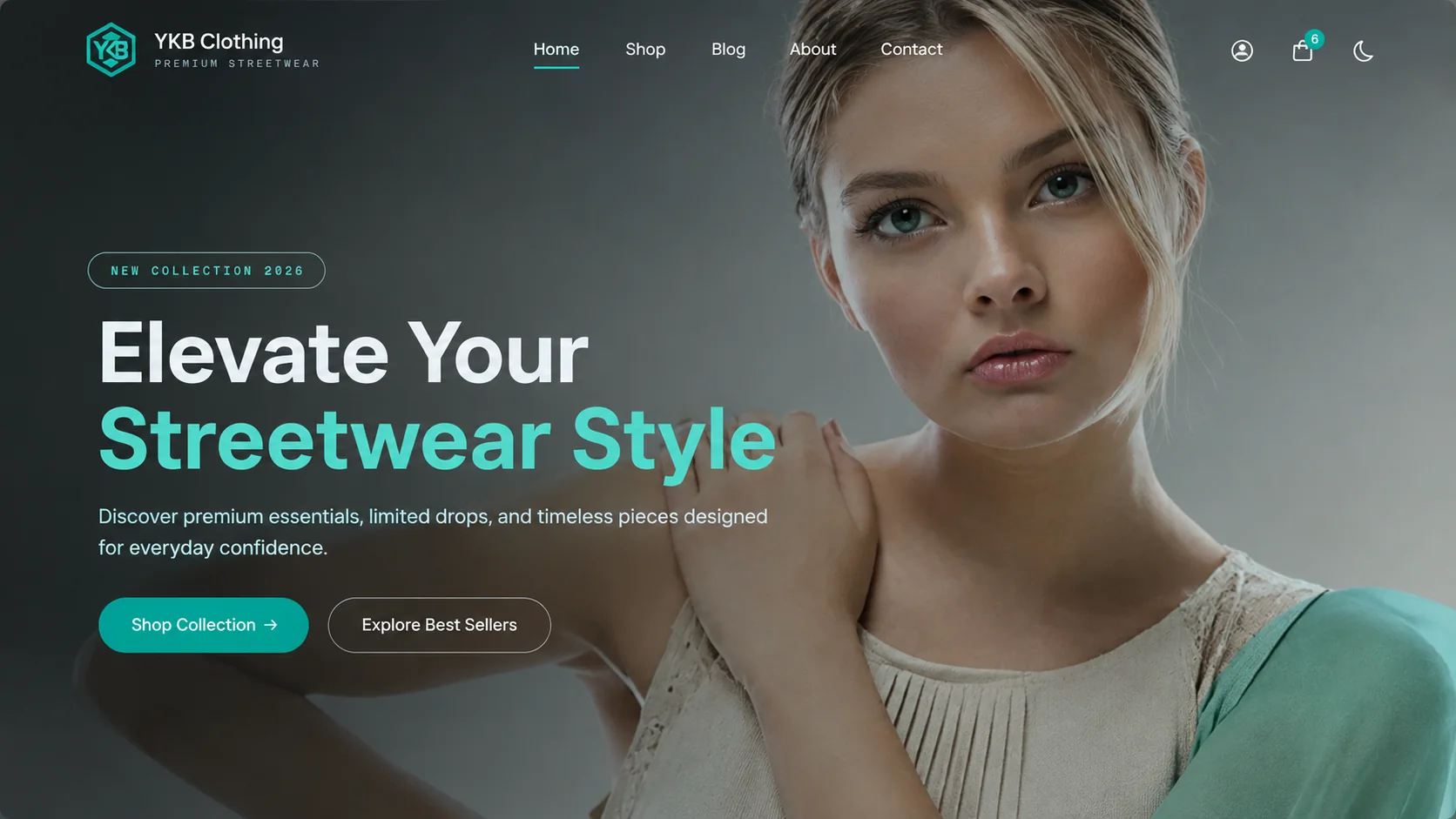
YKB Clothing storefront homepage and featured apparel collections
01 — Homepage: Storefront landing page featuring apparel highlights and brand navigation.
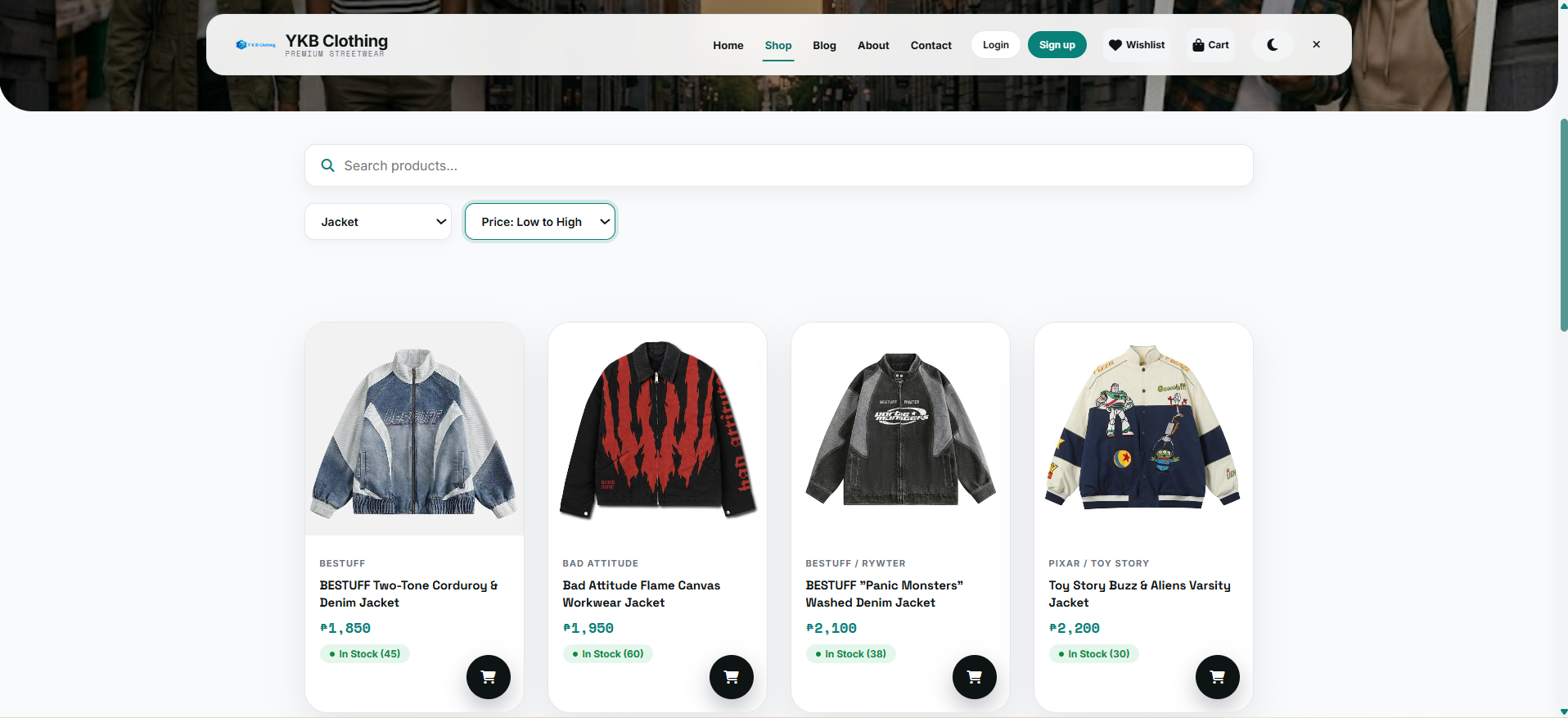
YKB Clothing product catalog shop page
02 — Product Shop: Filterable catalog displaying available apparel items with pricing and categories.
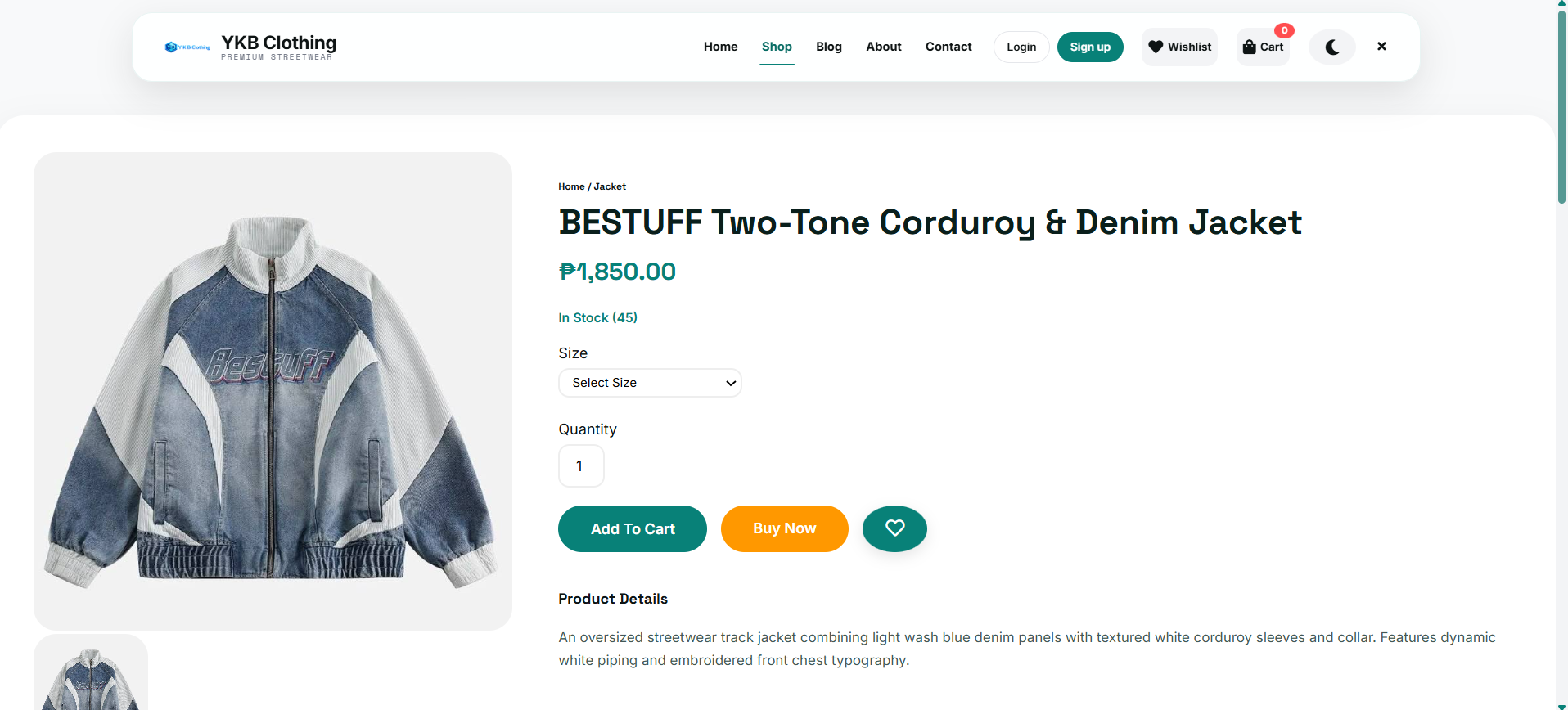
YKB Clothing product detail page with size selection and reviews
03 — Product Detail: Detailed view with product images, sizing options, customer reviews, and cart actions.
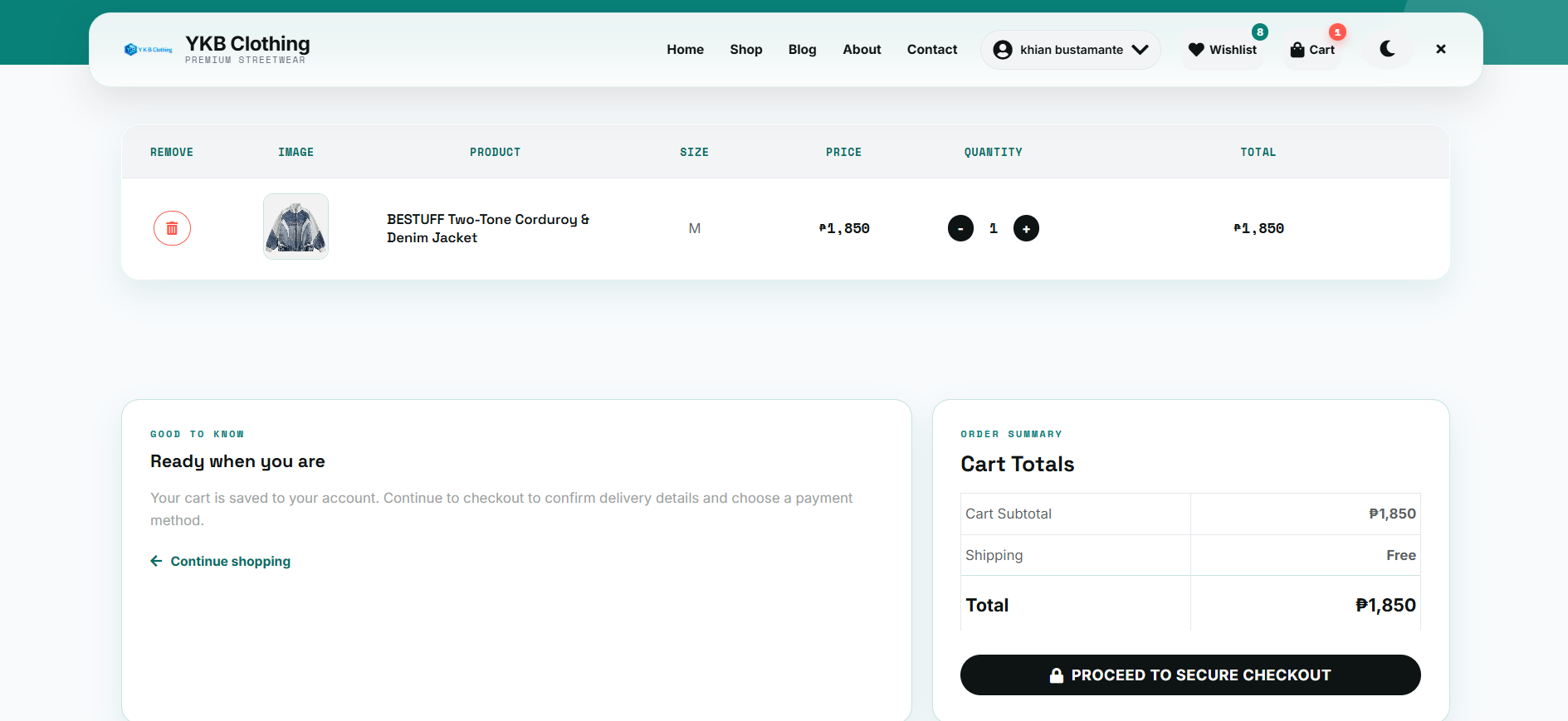
YKB Clothing shopping cart drawer and order summary
04 — Shopping Cart: Real-time cart state with item quantities, price calculations, and checkout progression.
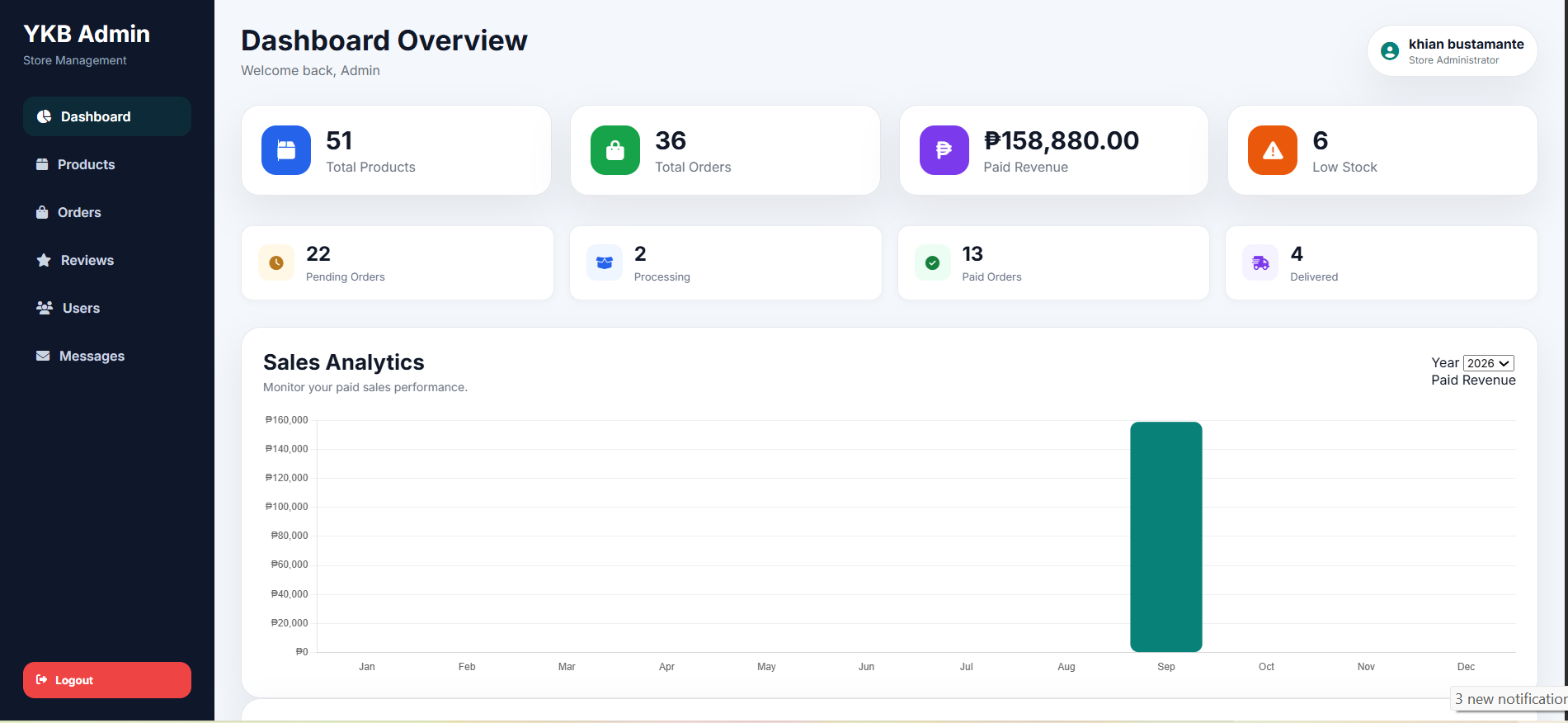
YKB Clothing administrative management dashboard
05 — Admin Dashboard: Central management panel for products, inventory, order processing, and reviews.

Problem

Most starter e-commerce demos stop at a static product grid. YKB Clothing was engineered as a complete full-stack shopping platform with persistent user sessions, realistic catalog filtering, dynamic cart calculations, checkout processing, user reviews, and an administrative panel for catalog management.

My role

I built the project end to end: storefront interface, client-side state handling, Node.js and Express backend API, MySQL database schema, JWT authentication, and administrative tooling.

Key features

User authentication
Product catalog
Shopping cart
Checkout
Order management
Wishlist
Product reviews
Admin dashboard
MySQL database

Stack

HTML, CSS, JavaScript, Node.js, Express.js, MySQL, JWT, bcrypt, Multer, Cloudinary, CORS, and Nodemailer. Deployed on Render.

Architecture & Technical Breakdown

Frontend + Backend HTML / CSS / JavaScript
Backend Node.js / Express.js
Database MySQL
Authentication JWT / bcrypt
Media Multer / Cloudinary
Deployment Render

A hard problem

Keeping cart state in sync between the client and the server without a frontend framework. I kept UI rendering separate from API calls, and used REST endpoints for products, cart, wishlist, and orders on a normalized MySQL schema for catalog and order data.

What I would do differently

I would continue improving the project for production use by adding deeper automated testing, expanding third-party payment gateway integrations, improving order management analytics, and strengthening automated monitoring and deployment workflows.

Live site